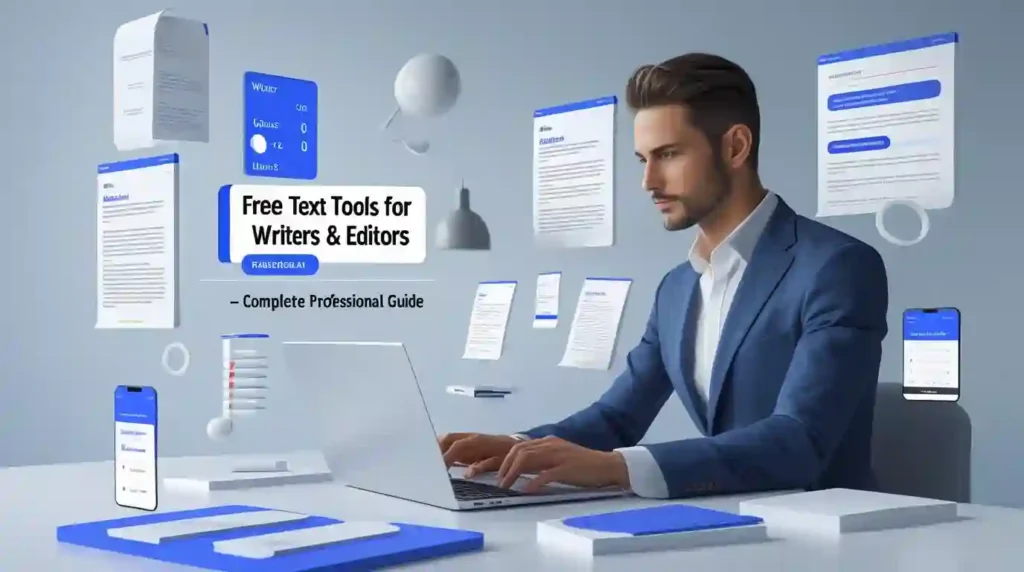
Writing and editing have never been more accessible. Whether you’re drafting your first novel, polishing a blog post, or preparing a manuscript for publication, free text tools can transform your writing process without costing a penny.
This guide explores the best free writing software available today, helping you discover tools that enhance your editorial workflow and boost your writing productivity. From grammar checkers to document editors, you’ll find everything you need to refine text at no charge and create professional-quality content.
What Are Free Text Tools for Writers & Editors?
Free text tools are online text tools and software applications designed to help writers and editors improve their content quality without financial investment. These writing enhancement tools offer features like grammar correction, spell checking, plagiarism detection, and text formatting—capabilities once reserved for expensive professional software.
Think of them as your digital writing assistant. They catch typos automatically, improve readability scores, and help you polish manuscripts for free. Whether you’re a fiction writer crafting dialogue or a technical writer preparing documentation, these content creation tools adapt to your specific needs.
The best part? Most free editing tools work directly in your browser, requiring no downloads or installations. You can access them from anywhere, making them perfect for writers who work across multiple devices.
Top Free Text Tools Every Writer Should Know
Grammar and Spelling Checkers
Grammarly Free Version remains one of the most popular grammar checkers available. While the premium version offers advanced features, the free tier catches common grammar mistakes and spelling errors effectively. It works as a browser extension, integrating seamlessly into your writing workflow.
LanguageTool serves as an excellent Grammarly alternative free option. This open source writing tool supports multiple languages and provides solid grammar correction software capabilities. It’s particularly useful for non-native English writers who need extra support with linguistic precision.
Hemingway Editor takes a different approach by focusing on readability. This free style checker highlights complex sentences, passive voice usage, and difficult-to-read passages. Writers who want to strengthen weak verbs and eliminate unnecessary adverbs find this tool invaluable.
Document Editors and Word Processors
Google Docs has evolved into a powerful word processor free solution. Beyond basic text editing, it offers collaborative editing tools that let multiple writers work simultaneously. The cloud-based platform automatically saves your work, so you never lose progress. Plus, it includes built-in spelling and grammar checking.
LibreOffice Writer provides a comprehensive Microsoft Word alternative for offline work. This free software includes advanced text formatting tools, style management, and compatibility with various document formats. It’s perfect for writers who prefer traditional desktop applications.
Notion combines note-taking, document creation, and project management into one platform. Writers use it for outlining tools, research organization, and manuscript tracking. Its flexible structure adapts whether you’re writing blog posts or planning a novel.
Plagiarism and Text Analysis Tools
Quetext offers free plagiarism detection with limited daily scans. It’s essential for academic writers and journalists who need to verify content originality. The tool highlights matching text and provides source links for verification.
Readable functions as a readability score checker, analyzing your text for grade level, sentence complexity, and overall clarity. This free text analysis tool helps ensure your writing reaches its intended audience effectively.
Specialized Writing Applications
Reedsy Book Editor caters specifically to authors with novel writing software free features. It includes chapter organization, formatting templates, and export options for various publishing platforms. Fiction writers appreciate its clean, distraction-free writing mode.
Hemingway App (web version) provides instant feedback on sentence structure. It identifies lengthy sentences, suggests simpler alternatives, and calculates reading time. Content creators use it to refine text before publication.
Markdown editors like StackEdit and Dillinger appeal to technical writers and bloggers. These plain text writing tools use simple formatting syntax that converts to HTML, making content creation platform-independent.
How to Use Free Text Tools Effectively
Getting the most from writing tools requires strategic implementation. Here’s a practical workflow that professional editors recommend:
Step 1: Draft Without Interruption Start by writing your first draft in a distraction-free environment. Tools like ZenPen or iA Writer’s free version help you focus on content creation without constant editing interruptions.
Step 2: Self-Edit with Structure Tools Run your draft through Hemingway Editor to identify structural issues. Look for sentence length variation, remove redundant phrases, and check passive voice usage.
Step 3: Polish with Grammar Checkers Use Grammarly or LanguageTool to catch grammatical errors and spelling mistakes. These tools detect issues your eye might miss during manual proofreading.
Step 4: Verify Originality For academic or professional work, scan content through plagiarism checkers to ensure all sources are properly attributed and content is original.
Step 5: Format for Purpose Apply final formatting using your document editor. Whether preparing manuscripts for submission or creating web content, proper formatting enhances professional presentation.
Why Choose Toolify Worlds for Your Writing Needs?
ToolifyWorlds brings together 100+ free AI tools and writing utilities in one accessible platform. Here’s what sets it apart:
Comprehensive Tool Collection Access multiple text tools without jumping between websites. From word count calculators to character counter tools, everything you need lives in one place.
Zero Cost, Maximum Value Unlike freemium platforms that hide essential features behind paywalls, ToolifyWorlds provides complete functionality without subscription fees or hidden charges.
Privacy-Focused Approach Your writing stays confidential. The platform doesn’t store your content or require account creation for basic tool usage. Process sensitive documents knowing your data remains secure.
Regular Updates and New Tools The platform continuously adds new writing utilities based on user feedback. Recent additions include text formatting converters and citation generators that streamline the writing process.
Cross-Device Compatibility Whether you’re on desktop, tablet, or mobile, ToolifyWorlds works seamlessly across all devices and browsers. Edit on the go without installing special applications.
Who Can Benefit from These Text Tools?
Professional Writers and Authors
Novelists use text comparison tools to track manuscript revisions. The ability to compare document versions helps identify changes during the editing process. Fiction writers also rely on readability checkers to ensure their prose flows naturally.
Students and Academic Writers
From essay composition to research paper preparation, students need reliable grammar correction and plagiarism detection. Free citation managers and bibliography generators save hours of formatting time, while style guide checkers ensure academic writing meets institutional requirements.
Content Creators and Bloggers
Digital content demands quick turnaround and consistent quality. Blog post editors with SEO suggestions help optimize content for search engines. Text-to-speech features let creators proofread by listening, catching errors that visual scanning misses.
Freelance Editors and Copywriters
Professional editors often work with tight budgets, making cost-effective editing solutions essential. These tools supplement manual editing, catching technical errors while editors focus on content quality and client communication.
Business Professionals
Email writing, report preparation, and proposal development all benefit from professional editing assistance. Grammar tools ensure business communication maintains credibility and professionalism.
Comparing Free Tools to Premium Alternatives
A common question emerges: can free tools replace professional editing software? The answer depends on your specific needs.
Free text tools excel at catching common errors and providing basic functionality. They’re ideal for everyday writing tasks, student work, and content creation on a budget. Tools like Grammarly’s free version catch approximately 80% of common grammatical issues.
Premium software offers advanced features like style consistency checking, tone adjustment, and industry-specific terminology support. Professional writers working on complex projects or those requiring specialized formatting may find paid options worthwhile.
However, for most writers, strategically combining multiple free tools creates a powerful editing suite. Using Hemingway for readability, Grammarly for grammar, and Google Docs for collaboration often provides everything needed for professional-quality output.
The key is understanding each tool’s strengths. ProWritingAid’s free version excels at style analysis. LanguageTool handles multilingual content better than alternatives. By matching tools to tasks, writers maximize efficiency without expense.
Essential Features to Look for in Writing Software
When evaluating free writing tools for your editorial workflow, consider these critical capabilities:
Real-Time Error Detection The best grammar checkers highlight issues as you type, allowing immediate correction. This auto-save functionality prevents errors from accumulating.
Contextual Suggestions Superior tools understand context, distinguishing between “their,” “there,” and “they’re” based on sentence structure. They provide explanations, helping writers learn from mistakes.
Format Flexibility Look for tools supporting various document formats—plain text, rich text, Markdown, or HTML. Format versatility ensures compatibility with different publishing platforms.
Offline Functionality While online tools dominate, offline text editors provide security for sensitive content and enable work without internet connectivity.
Customization Options Personal dictionaries, style preferences, and adjustable suggestion levels let you tailor tools to your writing voice rather than forcing conformity.
Advanced Text Tools for Specific Writing Types
Different writing formats require specialized tools. Here’s how to match tools to your content type:
For Academic Writing LaTeX editors handle complex mathematical equations and scientific notation. Citation managers organize research sources. Academic paper editing tools ensure proper formatting for journals and institutions.
For Creative Writing Novel writing software includes scene organization, character development tracking, and plot planning features. Outlining tools help structure complex narratives before drafting begins.
For Technical Documentation Markdown editors with live preview enable efficient technical writing. Version control integration helps teams collaborate on documentation projects.
For Screenwriting Specialized screenplay formatting tools ensure proper script layout. These free alternatives to expensive screenwriting software maintain industry-standard formatting automatically.
For Journalism Text analysis tools verify fact accuracy. Character counters ensure articles meet publication length requirements. Headline analyzers optimize article titles for engagement.
Maximizing Writing Productivity with Free Tools
Beyond error correction, these tools dramatically improve writing efficiency:
Eliminate Distractions Distraction-free writing modes remove interface clutter, helping you maintain focus during creative sessions. Full-screen editors with minimal formatting options reduce the temptation to edit prematurely.
Track Progress Word count calculators and writing statistics trackers help monitor daily progress toward goals. Many writers find that visible progress metrics increase motivation and consistency.
Streamline Revision Text comparison tools quickly identify differences between document versions. This speeds the revision process when working with editor feedback or comparing draft iterations.
Improve Research Organization Note-taking apps integrated with writing tools keep research accessible during composition. Quick reference to sources prevents workflow interruption.
Automate Repetitive Tasks Text manipulation utilities handle bulk formatting changes. Need to convert text case or remove extra spaces? These tools complete tedious tasks instantly.
Common Questions About Free Writing Tools
Do free grammar checkers really work effectively? Yes, modern free grammar checkers catch the majority of common errors. While they may miss nuanced style issues that premium versions detect, they provide substantial value for everyday writing. The key is understanding their limitations and not relying solely on automated checking.
Can I use these tools for commercial writing projects? Most free text tools allow commercial use, but verify each tool’s terms of service. Generally, the writing you create remains your intellectual property regardless of the tool used to create it.
Are online text editors safe for confidential content? Reputable platforms like Google Docs use encryption and maintain strong security practices. However, for highly sensitive documents, consider offline alternatives or tools that process content locally without uploading to servers.
Which free tool works best for fiction writing? Fiction writers often prefer Reedsy Book Editor for its novel-specific features or Google Docs for its collaboration capabilities. Hemingway Editor helps with prose clarity, while Grammarly catches technical errors.
How do free tools compare to professional editing services? Free tools complement but don’t replace human editors. They excel at catching mechanical errors but lack the judgment needed for developmental editing, tone assessment, or content restructuring. Use tools for technical accuracy, then consider professional editing for critical projects.
Can these tools help overcome writer’s block? While editing tools don’t directly address creative blocks, some platforms include writing prompts and exercises. The act of refining existing text using these tools can sometimes spark new ideas and momentum.
Do text tools work on mobile devices? Most modern writing tools offer mobile-responsive websites or dedicated apps. However, extensive editing works better on larger screens. Mobile versions excel for quick edits, proofreading, or capturing ideas on the go.
Are there limitations with free versions? Free tools typically limit features rather than usage. You might encounter daily scan limits on plagiarism checkers or missing advanced suggestions in grammar tools. For casual users, these restrictions rarely impact usability.
How can I learn to use these tools effectively? Start with one tool at a time, exploring its features through actual use. Most platforms offer tutorials or help documentation. The learning curve is generally minimal—most writers become proficient within a week of regular use.
Which tools do professional writers actually use? Professional writers typically combine several tools: Google Docs or Scrivener for drafting, Grammarly or ProWritingAid for editing, and specialized tools for specific needs. The exact combination varies based on writing type and personal preference.
Building Your Perfect Writing Toolkit
Creating an effective writing toolkit means selecting tools that complement your specific workflow. Here’s a framework for building yours:
Start with Core Essentials Choose one primary word processor for drafting. Google Docs offers collaboration features, while LibreOffice provides offline capability. Select based on how you work most often.
Add Grammar Support Install at least one comprehensive grammar checker. Grammarly’s browser extension works across platforms, while LanguageTool integrates into many applications.
Include Style Enhancement Add Hemingway Editor or a similar readability tool to your routine. These catch issues that grammar checkers miss, improving overall writing quality.
Integrate Specialized Tools Based on your writing type, add genre-specific tools. Academic writers need citation managers. Fiction authors benefit from plot organizers. Business writers might add email optimization tools.
Establish a Workflow Create a consistent process for moving work through your toolkit. Knowing which tool to use at each stage reduces decision fatigue and increases efficiency.
The Future of Free Writing Technology
The landscape of writing assistance continues evolving rapidly. AI-powered tools now offer sophisticated suggestions beyond basic grammar correction. Some predict contextual improvement, adapting recommendations based on your writing style and goals.
Integration between platforms is improving. Soon, writers might access comprehensive editing suites within single interfaces, eliminating the need to switch between multiple tools.
Voice-to-text technology advances make verbal drafting increasingly viable. Writers can speak their ideas, then use text tools for refinement—a powerful combination for those who think verbally.
Despite technological advancement, the fundamental writing craft remains human. Tools enhance efficiency and catch errors, but creativity, voice, and storytelling still require human judgment and skill. The best approach combines technological assistance with continued craft development.
Final Thoughts: Empowering Writers Through Accessible Tools
The democratization of writing technology has leveled the playing field. Quality writing tools are no longer reserved for those with substantial budgets. Whether you’re a student completing assignments, an author pursuing publication, or a professional communicating with clients, free text tools provide the support you need.
Success comes from understanding what each tool offers and how it fits your writing process. Experiment with different options. Some writers prefer comprehensive platforms, while others thrive with minimal, distraction-free environments.
Remember that tools serve your writing—not the other way around. Use them to enhance your natural voice rather than conforming to algorithmic suggestions. The goal is creating content that resonates with readers while maintaining technical accuracy.
Start exploring these free resources today. Your next breakthrough might come from discovering the perfect tool that finally clicks with your creative process. The only investment required is time to learn what works best for you.
Visit Toolify Worlds to access these writing tools and discover new utilities added regularly. Transform your writing process without spending a dollar, and join thousands of writers who’ve elevated their craft through smart tool selection and consistent practice.